Bolt-down versus concreted base plates
A bolt-down base plate suits hardstanding such as a concrete yard or car park, using resin or expansion anchors rather than digging a footing, which keeps the surface intact and the fence removable if the layout changes.
A concreted post gives a stiffer, more permanent fixing on soil or made-up ground, but it isn't an option where the surface can't be broken — the choice is driven by the ground, not by preference.
Sleeper edging and planters
Softwood landscape sleepers are pressure-treated to a ground-contact use class and are generally cheaper and more consistent in size than reclaimed hardwood railway sleepers, which vary in condition and may carry historic residues such as creosote unsuitable for areas near planting or seating.
Sleepers used for raised beds or low retaining edges are usually stacked and pinned with long timber screws or steel rebar driven through pre-drilled holes rather than simply stacked loose, since an unpinned stack can shift as the ground behind it settles.
Where a sleeper structure is also expected to retain a meaningful depth of soil rather than just edge a bed, it moves into proper retaining-wall territory with its own drainage and structural considerations.
Overhanging branches crossing a boundary line
A property owner generally has the right to cut back branches or roots that cross the boundary from a neighbour's tree, up to the boundary line, though the cut material technically still belongs to the tree's owner and should be offered back.
This self-help right doesn't apply where the tree is protected by a Tree Preservation Order or sits in a conservation area, in which case permission is needed before cutting.
Where a fence line is being planned near an overhanging tree, checking the tree's protected status first avoids inadvertently carrying out unauthorised work.
Brace direction on a braced timber gate
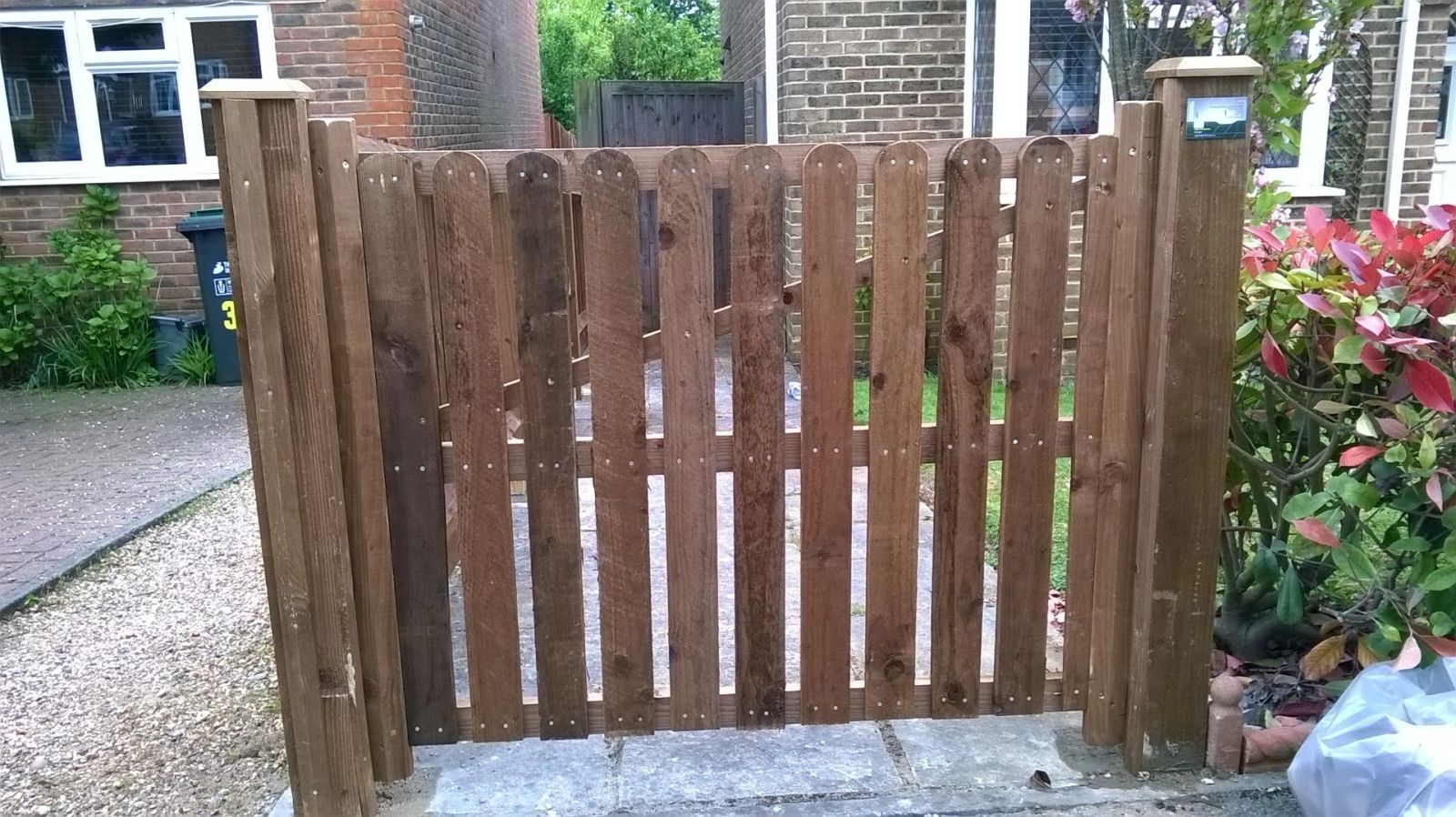
A diagonal brace on a ledged-and-braced gate has to run from the bottom hinge corner up to the top latch corner to work in compression rather than tension, and a brace fitted the wrong way round does almost nothing to stop the frame dropping.
This is a common fault on older self-built gates, and correcting brace direction is sometimes enough to fix a sagging gate without replacing any timber.
Raised beds built directly against a fence
A raised planting bed built with its back edge against a fence line keeps damp soil and mulch in permanent contact with the lowest boards or gravel board, which accelerates rot at exactly the point most vulnerable to moisture.
Lining the inside face of the bed against the fence with a damp-proof membrane, rather than backfilling soil directly onto the timber, reduces this contact without changing the visible design.
This detail is easy to miss at the planning stage since the bed and the fence are often specified and built by different trades without either flagging the interaction.
Hardwood options for gates
Gates take more racking stress than a fixed fence panel, opening and closing on a single edge, which is why hardwoods such as oak or iroko are often specified for gates even where the adjoining fence is softwood.
Oak's natural durability means it can be left untreated and will weather to silver-grey, but it also moves seasonally and can stain surrounding masonry with tannin run-off in wet weather, which is worth flagging before it's fitted next to a pale render or paving.
Hardwood gate frames are usually built with mortice-and-tenon joints rather than the simple nailed or bracketed joints acceptable on a softwood panel, since the joint has to resist years of racking without loosening.
Deck boards against a shaded wall building up algae
A deck built hard against a shaded wall, fence, or dense planting on one side often shows a distinct band of algae growth along that edge well before the rest of the deck, since it dries far more slowly after rain.
This uneven wear pattern is normal rather than a sign of a substandard board, but it does mean that edge needs cleaning more often to keep slip resistance consistent across the whole deck.
Where possible, leaving even a narrow gap between the deck edge and an adjoining wall or dense hedge improves airflow along that edge and reduces how quickly algae establishes there.
Line wire spacing on a chain-link run
Chain-link relies on horizontal line wires threaded through the mesh at intervals to stop it sagging or being pushed out of shape between posts; wider spacing saves wire but lets the mesh bow more under a leaning load.
A security-rated chain-link run typically tightens this spacing compared with a low-cost agricultural install, along with a straining wire top and bottom rather than just one line.
Mixing old and new timber colour on a repair
Freshly treated timber is noticeably lighter or greener than an older run that's already weathered, and that colour difference is temporary rather than a defect, evening out over the first year or two of UV exposure and weathering.
Where colour match matters immediately, a treatment or stain closer to the weathered tone can be applied to the new timber, though it won't be an exact match on day one.
Wrought iron versus mild steel gate repairs
Genuine wrought iron on older gates is more corrosion-resistant and easier to work hot than the mild steel used on most modern fabricated gates, but original wrought iron sections are harder to source for a like-for-like weld repair.
We identify which material an older metal gate is actually made from before quoting a repair, since the repair method differs between the two.
Footway licences for materials on a pavement
Storing fencing materials, a small skip, or scaffolding on a public footway, even briefly, can require a licence from the council responsible for that stretch of highway.
This is separate from any parking suspension for a vehicle, and covers the physical obstruction of pedestrian space rather than the road itself.
On narrow residential pavements it's worth checking the council's footway licence requirements ahead of a delivery, since blocking a pushchair or wheelchair route without authorisation can draw a complaint.
Using a rule of thumb for how much sound timber a repair joint needs
A splice, bracket or sistered repair generally needs a reasonable depth of genuinely sound timber on each side of the joint to hold its fixings securely, and a post probed as sound for only an inch or two below the surface usually doesn't have enough left to repair into reliably.
Where a probe test shows sound timber tapering off quickly rather than continuing solidly below the damaged section, that's usually the point where replacement becomes more sensible than trying to repair into marginal material.
Centre drop bolts on a double-leaf gate
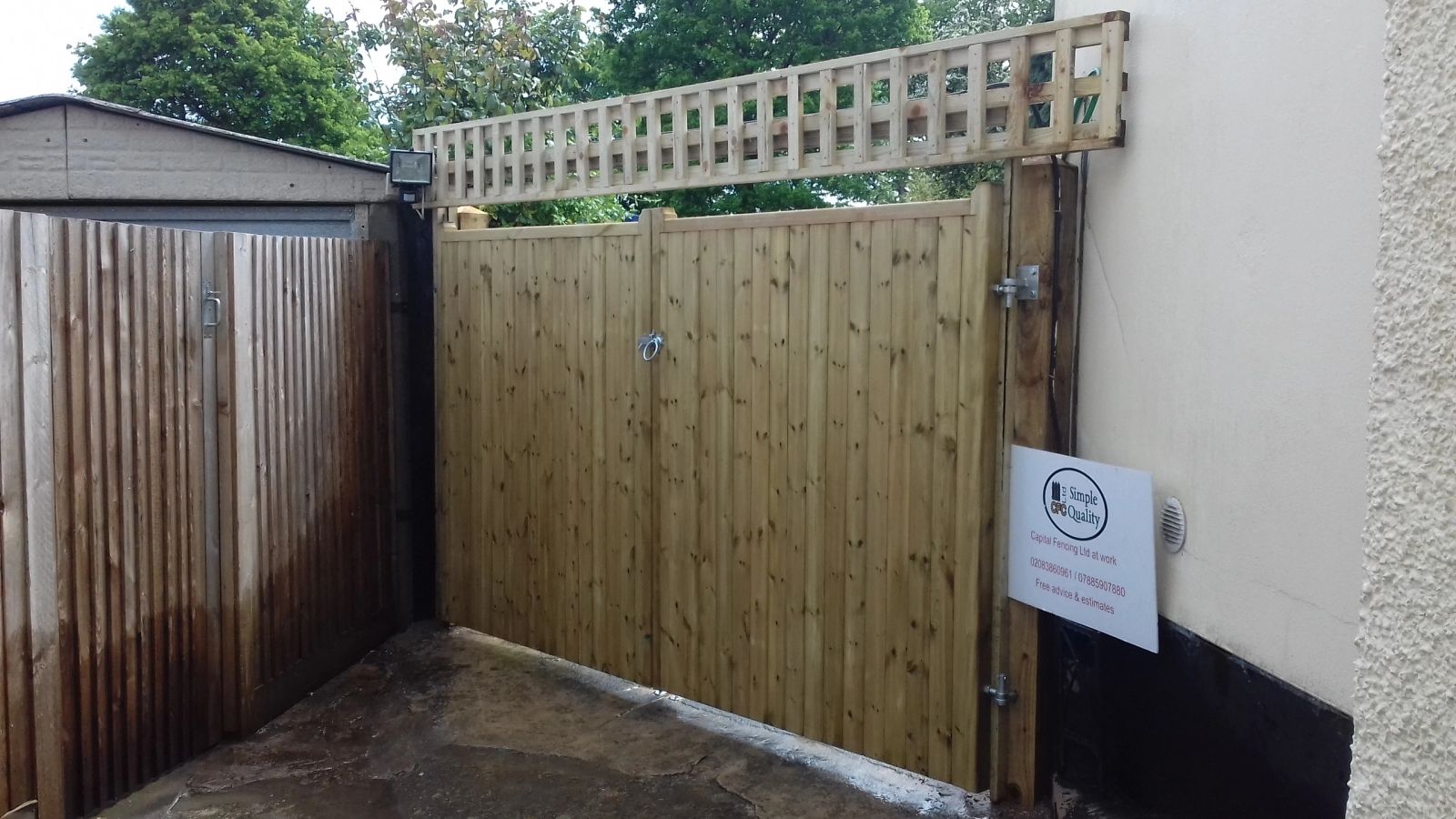
A double swing or sliding gate needs one leaf fixed with a drop bolt into a socket set in the ground or a threshold plate, giving the pair a solid centre point to lock against rather than relying on the latch alone to hold both leaves.
The drop bolt socket needs to stay clear of debris and frost heave to keep engaging properly, and it's a common item that gets missed on a routine gate check.
Transition detail from decking down to lawn or planting
The edge where a deck meets an adjoining lawn or border needs a defined transition — a fascia board with a small step down, or a gravel or edging strip — rather than boards simply stopping at soil level, which otherwise leads to soil and organic matter migrating up against the deck edge.
That buildup against an unprotected deck edge holds moisture against the timber in exactly the way a raised bed built too close to a fence does, and is a common cause of localised rot along an otherwise sound deck perimeter.
A simple edging detail agreed at the design stage costs little compared with the deck itself but noticeably protects the vulnerable soil-contact edge.
Checking a frame is square before re-hanging
A frame that's been repaired or partially rebuilt is checked for square by measuring both diagonals rather than by eye, since a frame can look straight from the front while still being out of square enough to bind against its post.
Only once the diagonals match is the gate face re-hung onto the corrected frame.
What a site survey covers
A proper site survey checks the boundary line against the deed plan where available, probes ground conditions at a few points along the run, and confirms access for both delivery vehicles and hand-carried materials.
It should also flag anything that changes cost before it becomes a surprise later — buried services, a shared boundary needing neighbour agreement, overhead cables limiting how tall equipment can be used, or a slope needing a stepped rather than level run.
A survey that skips any of these and goes straight to a headline price is the most common reason a quote changes significantly once work actually starts.
Frost heave effects on shallow-set posts
Frost heave occurs when water in saturated soil freezes and expands, lifting the ground surface and any shallowly set post embedded in it, sometimes by several millimetres each freeze-thaw cycle over a winter.
Posts set below the typical frost penetration depth for the region are far less affected, since the freezing zone that drives heave rarely reaches that far down, which is one reason recommended minimum depths are deeper in areas with harder winters.
A post that's visibly risen slightly over a hard winter, without any sign of the concrete cracking, has often been affected by heave rather than a failed footing, and it can sometimes settle back as the ground thaws.
Seasonal restrictions on hedge and vegetation clearance
Clearing vegetation or a hedge to make way for a fence during bird nesting season, broadly March to August, risks disturbing an active nest, which is a wildlife offence regardless of whether the fencing work itself is otherwise unrestricted.
A quick visual check for active nests before cutting back growth is standard practice, and where a nest is found the sensible step is working around it rather than pushing ahead with clearance.
Outside nesting season, most routine hedge cutting ahead of fencing work has no seasonal restriction, though thicker or more established hedgerows may still need the checks covered elsewhere for protected hedgerows.
Latch and drop-bolt corrosion over a gate's lifecycle
A gate latch or drop bolt sees repeated mechanical wear on top of weather exposure, and standard zinc-plated steel components typically show surface corrosion and stiffening action within a few years of regular outdoor use.
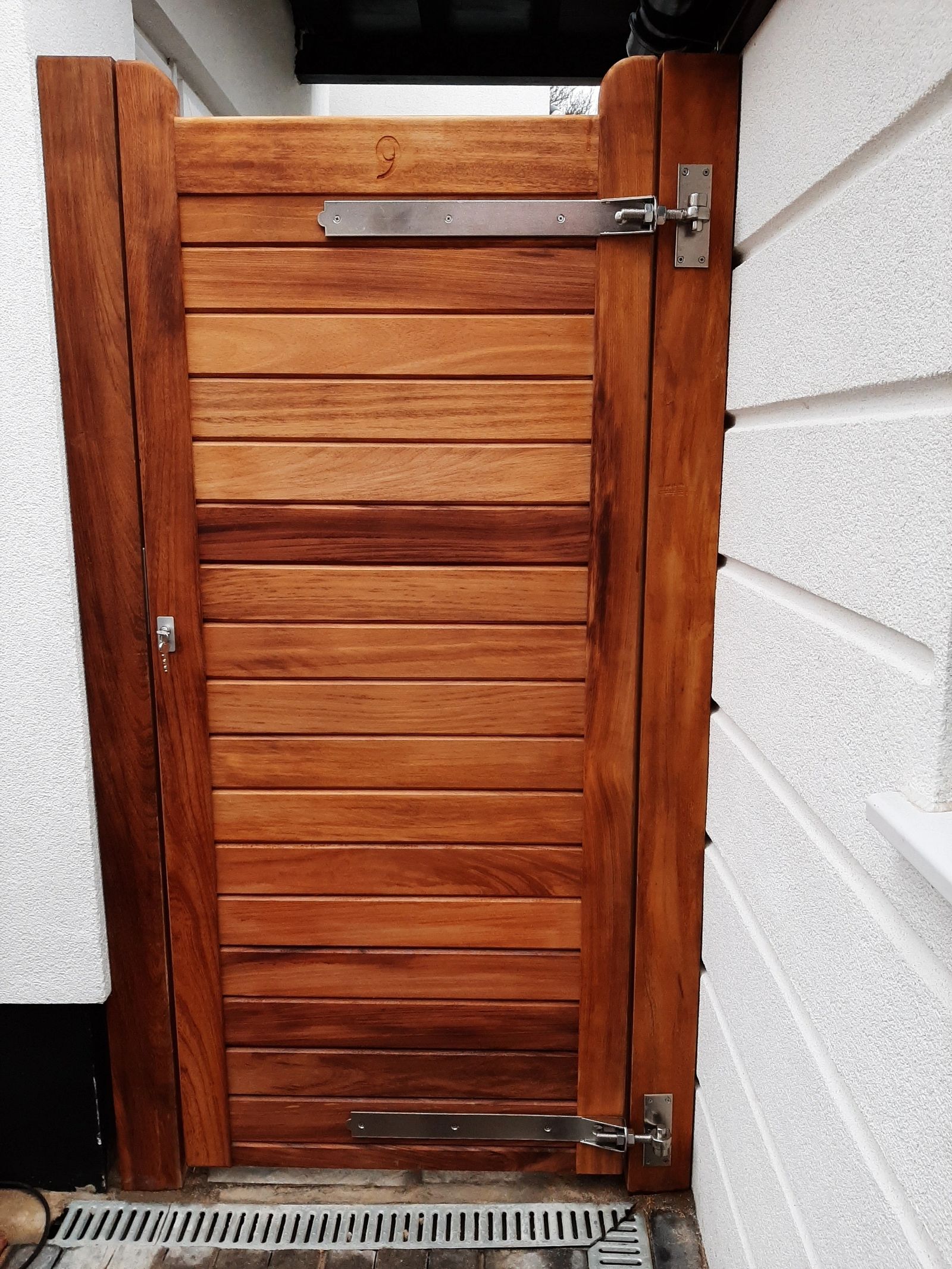
Stainless steel or marine-grade fittings cost more initially but avoid the seized or snapped bolt that is one of the most common minor gate failures, particularly on a drop bolt that isn't operated daily and can seize unnoticed.
An annual light oiling of moving parts, alongside the general hinge check, keeps a latch mechanism working smoothly well beyond the point a neglected one would start sticking.
Communal gate access arrangements for allotment sites
An allotment site's perimeter fence is usually a lower-cost stock or mesh fence given the modest value at risk, but the communal access gate often gets a disproportionately stronger lock and hinge set, since it's the single point every plot holder and any opportunist intruder both have to pass through.
A keypad or coded padlock at the shared gate avoids the administrative burden of cutting and distributing individual keys to a changing list of plot holders over time.
Parking suspensions and permits for works
Where a job needs a van parked directly outside for loading, or a dropped kerb blocked for delivery, most councils offer a paid parking bay suspension or dispensation that has to be applied for in advance, sometimes with several working days' notice.
On residents' permit streets, working without a suspension risks a parking charge notice for the vehicle even where the work itself is entirely legitimate, since traffic wardens enforce the bay markings regardless of the reason for parking.
Booking the suspension early and displaying the paperwork in the vehicle windscreen is a small piece of admin that avoids delays and unnecessary penalty charges on street-fronting jobs.
Neighbour notification during a boundary planning application
Where a planning application is needed for a boundary structure, the council typically notifies adjoining neighbours and gives them a period to comment before a decision is made.
This is a formal statutory step distinct from any informal courtesy conversation that may already have taken place, and objections raised at this stage are genuinely considered by the case officer.
Having already discussed the proposal informally with a neighbour often means fewer surprises when the formal notification arrives.