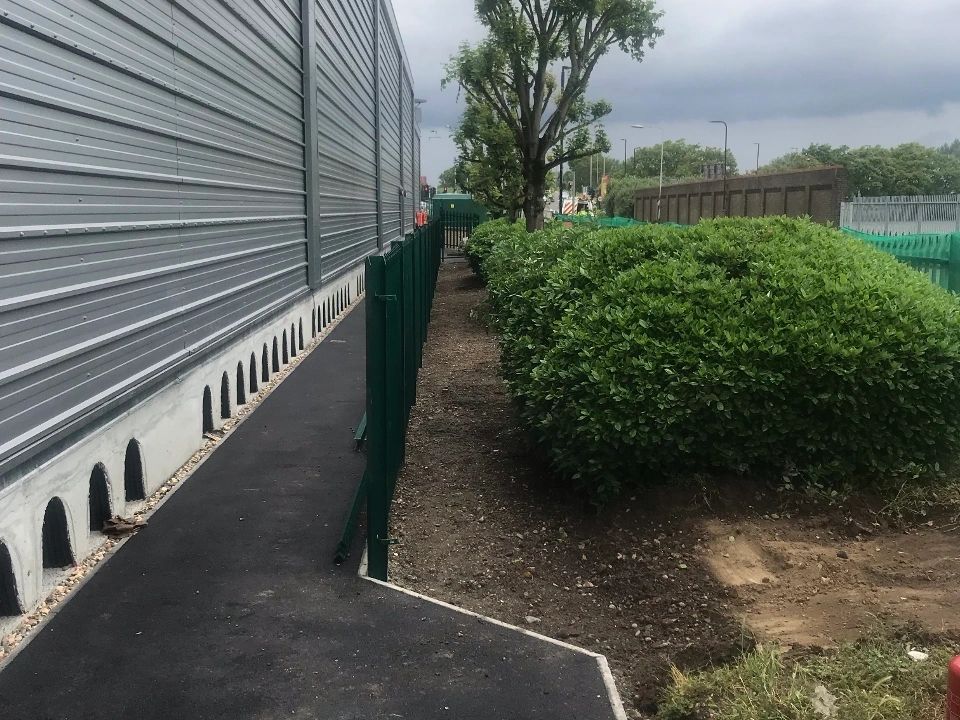
Timber, mesh and steel palisade compared
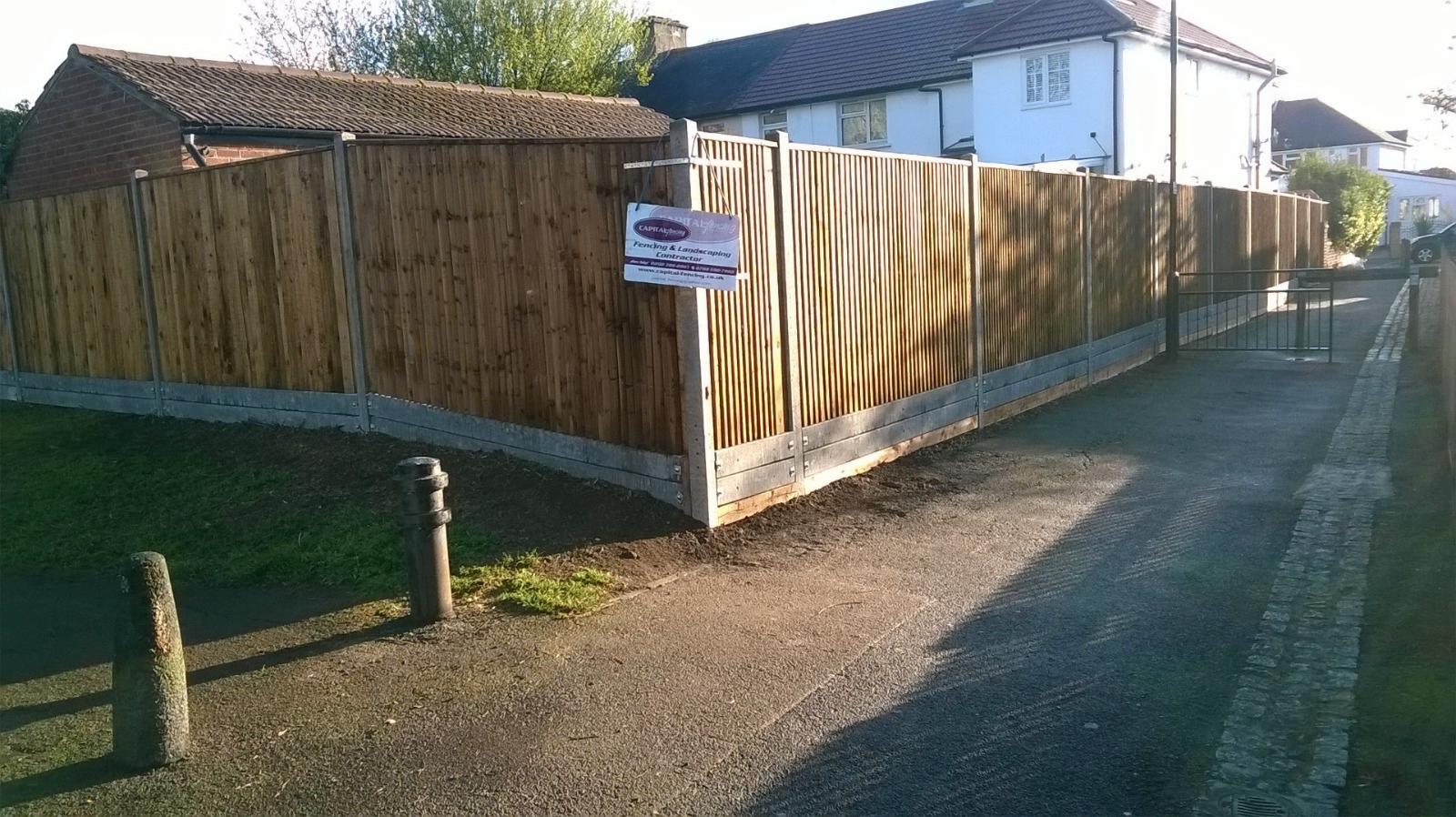
Timber gives a solid sightline and a domestic look but needs a heavier spec than a standard garden fence to hold a security brief; steel palisade and weld-mesh give a harder physical barrier with a more industrial appearance, which suits a yard better than a front garden.
Most briefs end up as a mix — a solid section where privacy matters and a mesh or railing return where an open sightline is more useful — rather than one material for the whole boundary.
Integrating new security fencing with existing period railings
Where a boundary already has decorative cast or wrought iron railings, a security upgrade sometimes adds a discreet inner mesh or bar liner behind the original railings rather than replacing them outright, preserving the appearance while closing the wider gaps a decorative pattern leaves.
This approach is common on a listed or conservation-area boundary where replacing the original ironwork outright would need consent that a sympathetic addition behind it may not.
Headroom and ground clearance on a rising site
A gate hung across ground that rises from one side to the other needs enough clearance built into its swing to clear the highest point of that rise without the bottom rail dragging as it opens.
We measure ground level across the full arc of swing, not just at the gate posts, before setting hinge height on a sloping or uneven site.
Repairing a fence on a sloped or stepped boundary
A boundary on a slope often fails first at the lowest point of each step, where water naturally collects, so a repair there sometimes needs a revised drainage detail rather than simply replacing the failed section like-for-like.
We check the fall of the whole run before repairing one section, since a step that's settled unevenly can be the real cause of a failure further along.
Water ingress through a missing or damaged post cap
A post cap sheds rainwater off the exposed end grain at the top of a post, and once it's gone missing or cracked, that end grain absorbs water directly and rots from the top down rather than only from ground contact.
Refitting a cap is a cheap and quick repair on its own, but where a post has already been exposed for some time, it's worth checking how far rot has travelled down the post before assuming a new cap alone has solved the problem.
Slide bolts and staple alignment
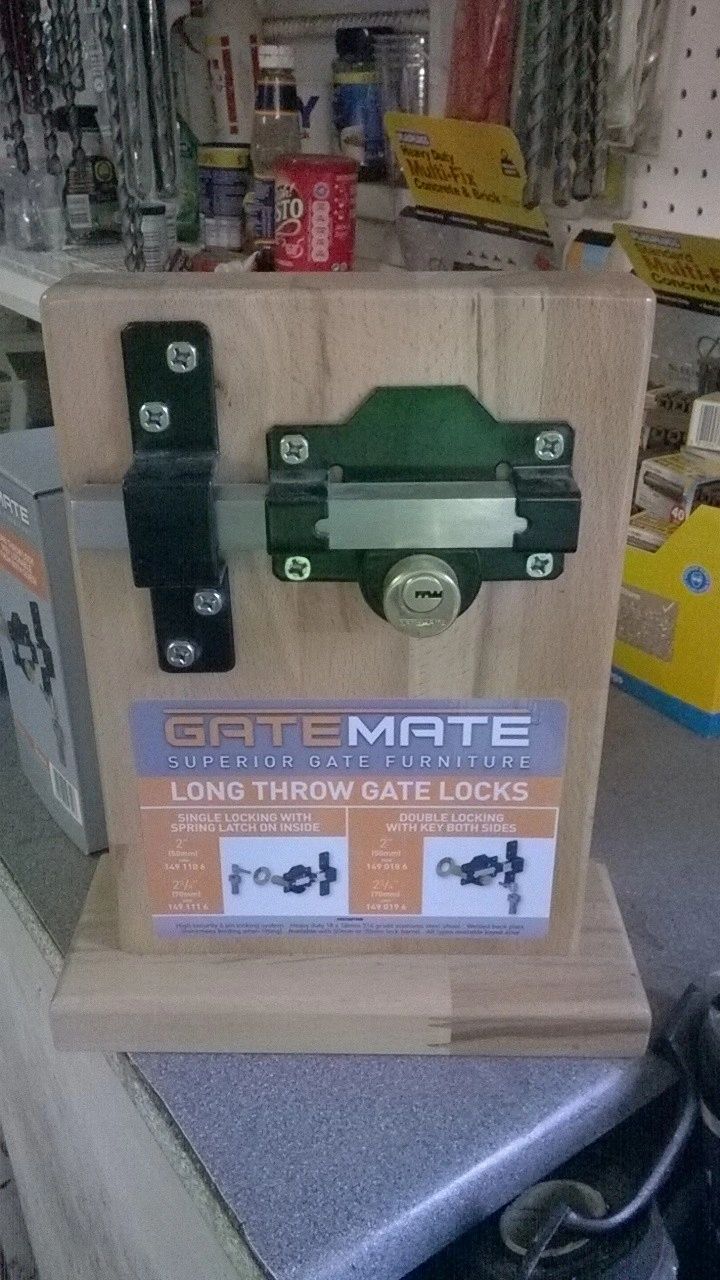
A slide bolt needs its guide staples and keep perfectly in line along the bolt's travel, since even a slight misalignment makes the bolt bind partway rather than sliding freely, which is often mistaken for a stiff or rusted bolt.
Re-aligning the staples after a gate has settled or a post has moved usually resolves this without needing to replace the bolt hardware itself.
Repair versus replace decision criteria
The decision between repairing and replacing usually comes down to what proportion of a run is affected and how sound the unaffected timber is — a single failed post on an otherwise good run favours a repair, while widespread rot along several bays tips toward replacement.
Age of the existing timber matters too, since a repair fitted into a fence already near the end of its working life may only buy a season or two before further failures appear elsewhere.
Talking to neighbours before you start
A shared boundary fence, even one that's entirely your responsibility to maintain, sits next to someone else's garden — giving a neighbour advance notice of the height, style and timing of the work heads off most disputes before they start.
Where a fence straddles the boundary line exactly, both parties technically have an interest in it, and a quick written note agreeing who's paying for what avoids a much longer argument later if it needs replacing again.
This isn't a formal Party Wall Act process — that applies to structures like walls between buildings — but the same basic courtesy of clear, written communication before work starts applies just as well to garden boundaries.
Knot loosening in structural timber
Knots are the base of a branch embedded in the trunk, and as timber dries the knot itself shrinks less than the surrounding wood, which can leave it loose or eventually cause it to drop out and leave a hole.
A live knot, still bonded to the surrounding fibres, is far less of a concern than a dead knot with a dark ring around it, which indicates the branch had already died before the tree grew over it and bonds poorly.
On load-bearing sections like arris rails, a cluster of large or dead knots near a fixing point is worth avoiding, since it reduces the effective cross-section carrying the load at that point.
Frost pockets in low-lying garden corners
Cold air sinks and pools in the lowest part of a sloped garden or a corner enclosed by walls and fencing on more than one side, creating a frost pocket that experiences more frequent and harder frosts than the rest of the same garden.
Concrete post bases and fixings in these pockets go through more freeze-thaw cycles each winter than elsewhere on the same boundary, which can accelerate the same frost-related cracking seen on shallow footings generally.
It's a detail worth noting on a site visit to a garden with an obvious dip or an enclosed low corner, since it may justify a deeper or more robust base spec for just that section.
Aligning capping rail over a stepped run
Capping rail fitted along the top of a level fence run is a straightforward continuous fix, but on a stepped run each panel sits at its own level, so the capping has to be cut and joined at each step rather than run through in one length.
A clean joint at the step usually means mitring or scarfing the capping ends rather than butting them square, since a square joint leaves an open gap where the two levels meet.
Where the steps are shallow, some fitters run the capping level in short horizontal sections with a visible small drop at each post, which is faster to fit but reads as more obviously stepped than a mitred joint.
Permitted development height limits
Under the General Permitted Development Order, a fence, wall or gate can normally go up to 1m without planning permission where it fronts a highway used by vehicles, and up to 2m elsewhere on the plot.
That 2m figure is measured from the natural ground level, not from the base of a retaining structure, which catches people out on sloping plots where the fence ends up effectively taller on the low side.
Corner plots, listed buildings and land inside a conservation area all tighten these limits, so it's worth checking the local authority's own guidance before ordering materials rather than after.
Terraced housing and rear access
Victorian and Edwardian terraces were rarely built with side access, which means materials for a rear garden fence often have to go through the house, over a shared side return, or down a narrow rear alley shared with several other properties.
That access constraint changes the practical choice of materials — full concrete gravel boards and long panels are harder to move through a narrow hallway than shorter timber sections carried in and built up on site.
It's also why timing matters on these jobs: a delivery that blocks a shared alley for half a day needs agreeing with neighbours in advance, not discovering on the morning of the job.
Levelling ground before building a decking substructure
A decking frame built over uneven ground without first levelling or terracing the site ends up with support posts of wildly inconsistent length, which is harder to get right and more prone to individual post settlement than a site graded roughly level first.
Removing turf and topsoil under the deck footprint rather than building over it also reduces the organic material that would otherwise decompose and settle unevenly under the structure.
Where the ground has a genuine and significant fall, working out whether to terrace the ground itself or simply vary support post heights is a decision made before any joists are cut, since it changes the whole substructure design.
Wet rot versus dry rot fungi in fence timber
Wet rot fungi need sustained high moisture content to establish and spread, and are the more common cause of decay in buried or ground-contact fence posts that stay consistently damp.
Dry rot, despite the name, also needs moisture to establish initially but can then spread through drier surrounding material via root-like strands, making it more of a concern in enclosed, poorly ventilated timber structures than open-air fencing.
In practice, most fence post decay encountered on typical garden and boundary fencing is wet rot rather than dry rot, given the open, ventilated conditions most fencing timber sits in.
Security lighting and cameras near a shared boundary
Security lighting or CCTV cameras fitted to a boundary fence can raise both nuisance and, for cameras capturing a neighbour's property, data protection considerations under UK GDPR if used inappropriately.
Positioning cameras to minimise capturing a neighbour's garden or windows, and using shielded lighting that doesn't spill excessively onto adjoining land, generally avoids most disputes before they start.
Where a neighbour raises a specific concern about a camera or light on a shared boundary, addressing it directly is usually simpler than waiting for a formal complaint to the council or Information Commissioner's Office.
Sequencing a multi-day install
A typical multi-day fence installation runs old fence removal and waste clearance first, then post setting with time for concrete to go off, then panels, gravel boards and capping once posts are firm enough to take a load.
Rushing panels onto posts before the concrete has cured enough — particularly in cold weather when curing slows down — is a common cause of a fence leaning within its first few weeks.
On a longer run it often makes sense to work in sections so part of the boundary is never left fully open overnight, rather than removing the entire old fence before any new posts are in.
Pool and hot tub enclosure fencing logic
While UK regulations don't mandate pool fencing the way some other countries do, insurers and safety guidance still recommend a self-closing, self-latching gate and a barrier without easy footholds around any domestic pool or hot tub, particularly where young children have access to the garden.
The latch or lock should sit high enough that a small child can't reach it even standing at the gate, and the gate should swing away from the pool area rather than toward it so it can't be propped open accidentally.
A solid or closely-spaced barrier at least 1.2m high with no horizontal rails low enough to climb is the general standard worth applying even without a specific legal requirement to do so.
Shared private water sources crossing a boundary
Some older rural properties share a private water supply, such as a well or borehole, with pipework running across one or more boundaries under a recorded easement.
Fencing work that might disturb this kind of shared supply pipe needs particular care, since interrupting it can affect a neighbour's water supply entirely, not just a garden feature.
Checking the title for any recorded private water supply arrangement is worth doing on older rural properties before any boundary groundworks proceed.
Diagnosing squeaks and creaks in gate hardware
A squeak or creak from a gate is almost always dry friction at a hinge pin, pivot or roller rather than a structural fault, and it's worth locating the exact source by working the gate slowly through its swing rather than assuming which hinge is responsible.
Cleaning out old, dirt-laden grease before applying fresh lubricant gives a longer-lasting fix than simply oiling over grit that's already worked into the bearing surface.
Frost heave in shallow footings
A post base set too shallow, or poured in ground that later saturates, can be lifted slightly by frost heave as ice forms and expands beneath it, then settles unevenly once it thaws.
This is most noticeable on posts set less than the recommended depth for their height, where the concrete base itself sits within the top layer of ground most affected by winter freezing.
Once a post has heaved even a few millimetres out of true, the movement tends to repeat each winter, which is why it is worth digging to the depth appropriate for the post height rather than the minimum that will stand up in summer.
Drainage easements running under a fence line
Some boundaries have a formal drainage easement recorded against the title, protecting a buried pipe or watercourse that a neighbouring property has the right to maintain access to.
Fence posts set directly over or immediately alongside a protected drainage run can technically breach the terms of the easement even if the pipe itself isn't damaged during installation.
Checking the title register, and asking the water company to confirm any known drainage records, is sensible before digging post holes on an older plot with an unclear drainage history.